• There is no place like home, but Betty found a second home with two people who were willing to share their lives and work with her.

    Sr. Freda, a courageous woman who developed a free hospital near Kitale because she couldn't bear seeing people crawl on their hands and knees to some distant clinic and Emmanuel, a Maasai man who had to sell his two bottom teeth for a cow to put him through high school. He returned to his village and built a school for orphaned and special needs children in the mountainous region of Kilgoris. This is their story and the story of the children they are helping.

STORY: LITTLE LEKISON

LITTLE LEKISON by Nahshon Rauta Napoe (This story has been slightly edited.)OLYMPUS DIGITAL CAMERA
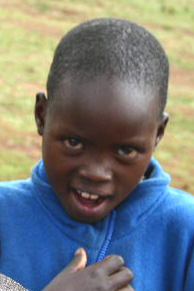
Little Lekishon was born in 1970 in a place called Ilmashuki.  After his mother died when he was five, his father took him to the house of his number three wife. In the house of his step-mother, he grew encountering cruelty and discrimination from his new family.

In those days, cows were considered the most precious property of the Maasai community.  If you did not have even a single cow, you were considered the poorest of all people.

Lekishon’s father had a herd of six hundred cows, a third of which rightfully belonged to the house of Lekishon.  Boys were the only ones to inherit a family’s property and since he was the only boy of his mother he should have inherited some cows.  But his step brother’s and envious step-mother hatched a plan to eliminate him from the grazing fields.  This was the only way they could rob him on his inheritance.

Lekishon knew how to tend cows, but everyone complained to his father that he was lazy and didn’t help them in the grazing fields.  This influenced his father and he was sent away to school.  School was the only place a child who did not seem productive at home could be sent.

Little Lekishon was admitted to one of the mission schools where he received favor from his teachers because he was very clever.  One day after scoring 95 in English his teacher was very pleased with his fast pace of mastering the language of foreigners and rewarded him with ten shillings.

He thought of how to use this money to get what he wanted and kept it safely until one day, as he traveled back home after classes, he passed a pineapple farm.  He had always wished to taste a pineapple, so that day he was as happy as a barren lady who had birthed two bouncing babies, to have money.

When the farmer spotted him he asked, “How are you young boy?”  “I’m fine.”
“How can I help you?” the farmer asked.
“Oh, yes.  I’ve come to buy a pineapple.  Is there one for ten shillings?” (that is 10 cents in US money)
“You foolish boy, do you think there is a pineapple for that small amount today?  Unless you want that small one over there.”  He pointed to a small pineapple which had not matured enough to be eaten.

But Lekishon gave him the ten shillings and told the farmer he would come back to pick it after two weeks.  As the farmer watched him slowly walk away, he called him back and gave him a mature pineapple, telling him to use his wit and wisdom well.

As Lekishon proudly carried his pineapple he was very happy he had achieved what he wanted.  In school he kept the candle burning and today he is one of the most renowned doctors in the country.  His step brothers and sisters each have at least ten children and are suffering back in the village.
Betty’s Journal: Day Nineteen

He  sat with me one night after dinner and told me the story of how he lost his two front teeth.  He spoke softly, while his son Larousi sat next to him drawing pictures and Lillian was reading the newspaper.  “I can never leave this beautiful valley,” he said, “but there are so many things that must change now that we no longer can pasture our cows.”  He explained that cows were once the wealth of the Maasai and they were a nomadic people who needed land to pasture their cows.

The Maasai people believed you didn’t own land, but only cared for it and used it. When the Brit’s arrived, land was deeded through purchase.  Of course, the Maasai people were unable to pay for the land needed to pasture their cows and the loss of land was a blow to their life-style.  Fifty years ago, when Kenya gained it’s Independence from Britain, the new President of Kenya was not from the Maasai tribe and distributed land to his tribal members, causing a deeper wound to the Maasai people and their way of life.  a great deal of tribal unrest and conflict as well as the political climate that has complicated helping people in the poor villages, for the new President and his aide are being tried for killing many people during the last election.

Twelve year old boys would have their faces covered with mud and when the mud was dry they would have a tooth pulled.  If the mud on their face did not crack it meant that they did not show pain or cry and they would be given a cow.  Emmanuel had two of his teeth pulled so he could get two cows and pay for his high-school education.

Betty’s Journal: Day Eighteen

DAY EIGHTEEN

It is 8 am and we are on our way to the  Sirua Aulo Academy.    With the help of a missionary Emanuel bought land on the top of a hill with a majestic view of the surrounding countryside and built a school for primary children of the poorest villages.  He believed every child should have an education, even special needs children.    Children in the Kenya Public system must be tested before they can enter public schools and if they can’t pass, they won’t be allowed to go to school, while special needs kids are ignored completely and often hidden from public view by their families.

His hands tighten on the steering wheel of the jeep as we slide and tip going up the hill.  His son Larousi bounces along happily in the back seat.

“I think it will be very hot today, ” Emanuel tells me.  “Then, suddenly, it will rain.”

I peer up at the sky awash in varying shades of pink, rust and gold.   “When will it rain?”

“Around…let’s say 5 pm.”

“Why then?”

“It’s just what happens this time of year.  The rainy season will be starting soon.”  He frowns.  “We need a well so the children will be safe if there is a drought and girls will be able to go to school if they don’t have to spend all day lugging water home for their families.”  I watch him as he glances out the window.  His eyes light up and he smiles as if he is transformed from the inside out with happiness.

OLYMPUS DIGITAL CAMERAHis mood is catchy for when I spot a orange headed lizard scampering over a mud hole, my heart seems to soar.  Birds of orange and black, their eyes rimmed with yellow dart among the trees.  I know I am feeling better, for  everything around me is somehow better,  more, every sensation more extreme, every color more brilliant this morning.  The school wasn’t far from Emanuel’s compound, but it took almost an hour to traverse the roads.

Emanuel glances at me.    I try to appear relaxed, but I must hang on to the seat to keep from slipping to the floor.  He is usually quiet, but today he relates a bit of history.  I think it is to ease my mind as we slip and slide along the muddy ruts as if we are on ice.  “The British weren’t really interested in Kenya but became involved because of Uganda and the source of the Nile.  The Government wanted to keep the Germans and French from having access to the Suez Canal as this was an important British trade route to India, the scared cow of the Imperial crown.”

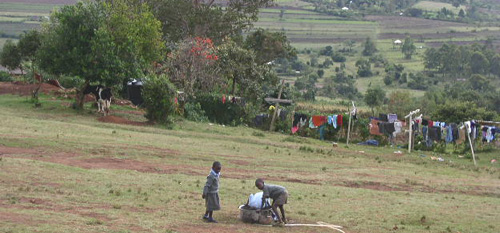
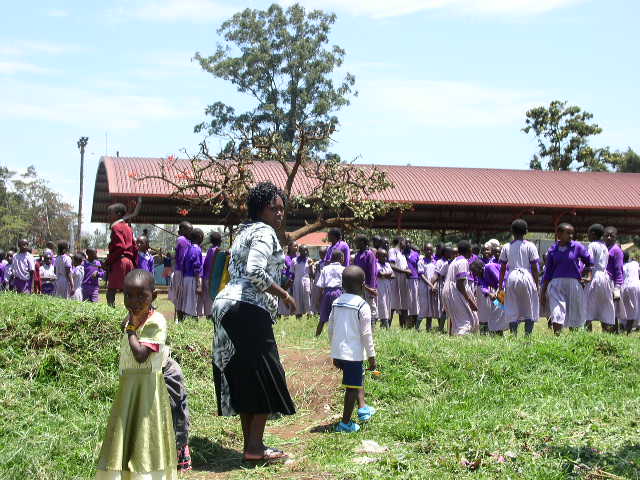
As we drive up to the school we pass a group of children playing soccer.  The ragged balls falls into a muddy hole.  A boy reaches in and throws the ball in the air; mud scatters from above.  We pass more children sitting and reading while others are washing clothes and hanging them to dry.

I lick my dry lips.  “Where are the rest of the kid?”

“In the school rooms.”  Emanuel points to a long low building.  We stop in front of a large square building that is the office and library.

The children, as well as the teachers, all live at the school and right now there are 380 students to teach and feed and clothe and care for.  They are fed three times a day, the food cooked over a wood fire.  Every three months the children are sent back to their villages for three weeks in order to keep the bond of the children and family or their caretakers strong.OLYMPUS DIGITAL CAMERA

Today I will work with three and four year olds.   I knock on the outside wood for there is no door and pause at the doorway, calling out “Hodi.”

“Karibu,” the teacher welcomes me to come in.  The children are happy to see me.  They’re dressed in a variety of un-matched clothes and sit on chairs.

It takes two hours to read the book,  The Very Hungry Caterpillar by Eric Carle for the children like to come up and touch the page, stare at me, pull on my hair.  The teacher works with each one of them as I tell the story and asks them questions.  Tomorrow they will each draw a picture of a butterfly, to illustrate the story.

I then went to the Nursery Children and read The Old Lady Who Wasn’t Afraid of Anything by Linda Williams.  We read the story and then sing the song.  The children delight in making all the sounds and movements of the shoes clopping, the pants shaking, the gloves clapping, the hat nodding, the shirt wiggling and the pumpkin crying “Boo Boo.”   It was difficult to find books for the children that spoke to them of their own experiences for the library was made up  of donated books from Western Countries.  We talked about a forest and a scarecrow and tomorrow when I visit I asked them to tell me about the things that might scare them when they took a walk in the bush.

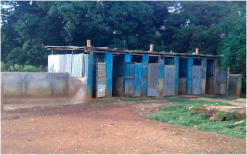
I eat a light lunch with Lillian who came with us to the school to check on the food supply. OLYMPUS DIGITAL CAMERA She is in charge of ordering what they need and seems very proud to have such an important job.  At home she is in charge of everything from getting food, cooking, cleaning, taking care of the cows, (they take a lot of work) milking them and then having to boil the milk twice before serving it.  Washing clothes in buckets of water carried from the rain barrels and heated over the wood.  The clothes are slung over fences and near by trees.  We eat beans, a great deal of beans and some greens.  I excuse myself to go to the latrine that is down the hill in a small wooden enclosure.

I stand over the hole in the ground and pee, happy, so happy that I have brought along a package of personal wipes.


  • Enter your email address to follow this blog and receive notifications of new posts by email.

    Join 62 other subscribers