
Every morning I wake to the howling and screeching of monkeys and barking of dogs. The monkeys sound like hundreds of old, rusty iron gates opening. Everywhere I look there is deep poverty. It is nothing like a poor neighborhood in America, for it is a poverty that stretches along the whole land. Survival is based on living with whatever is at hand. A piece of wood can hold a sack of grain, two or three can build a shelter, ten sticks will cook a meal. And, unlike a poor neighborhood where I am from, here I’m surrounded by beauty: royal blue birds, flaming red trees, a wilderness with wild animals just beyond the deeply rutted roads and corn fields. When I was young I used to play a game with myself of trying to trick the devil. I am now hoping it might work if I meet up with a lion. At night, when the dogs bark, I can’t help shivering at the thought of what might be creeping close.
Last evening, Evita, Sr. Freda’s 13 year old granddaughter took me for a walk around the village. As the evening sun left patches of light across the valley, we walked across a potholed road to a landscape scattered with cactus. We followed a dry river bed that ran like a gutter alongside the road, high above constant traffic. The air felt more laden with smoke as everyone was cooking over open fires. At one point we passed a family of baboons sitting by the side of the road grooming themselves and one another. They ignored us as we passed by. She took me down a tree-lined lane and we were greeted by more than fifty monkeys jumping from trees to roofs and back to trees. I picked up a stick and swung it as we walked to keep them from jumping on us.
A series of flimsy Kiosks lined the path. Around them, groups of people tended to their affairs. At the end of the lane a woman stirred a metal pot lodged in a dead tree. Evita ran in front of me, teasing that she was going to leave and I would be lost. “You’re lost, you’re lost,” she cried as she ran away. And indeed I was. I was lost and growing tired after being with the children all day, but Evita loved to run and jump and tease. She wanted to be an engineer, but her schooling was stalled because her tuition couldn’t be paid.
I waited for her to reappear in front of a rickety stall with one kerosene lamp that seemed to oppress as the twilight deepened and the insects gathered around the lamps glow. The feeling I knew, had something to do with feeling out of control. A layer of dust lay over my feet. It seemed an obsession, my need to wipe my feet. Every night I poured a small cup of water over them if there was no water for a shower. Perhaps Evita sensed my mood for when she returned she spoke with kindness in her voice. “We are almost home. We just turn here.”
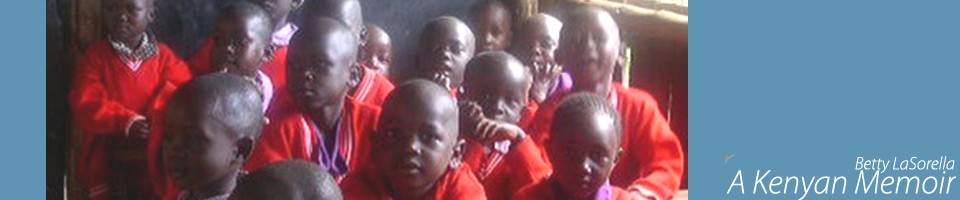
The days pass, alternating between the morning rains and sunny, white afternoon light and purple dark nights. Each morning I’m with the little children.
Today we make a friendship chain with magazines I had found at Sr. Freda’s and cut into strips. They clamor for pieces of tape, their hands reaching out, needing the tape as much as they need milk. Any small thing is a great thing to them.
After lunch I hurry to the girls high-school.
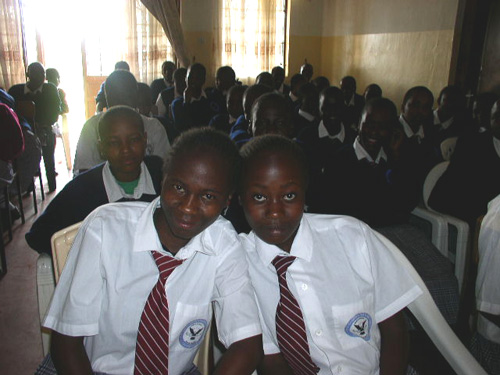
The young girls sit up straight and I am surprised by such attentiveness. I can only wonder if they are acting or really find talking to them about writing, music, Michael Jackson and dancing interesting. I sense a desire to learn here for they are both grateful for the opportunity they have been given by Sr. Freda and fearful it can be snatched away. At any minute they could be called back to a step-home or village elder to help put an older, or younger boy through school. There is an urgency to gain as much knowledge as they can each day in order to have a chance at a future, a job, a career. 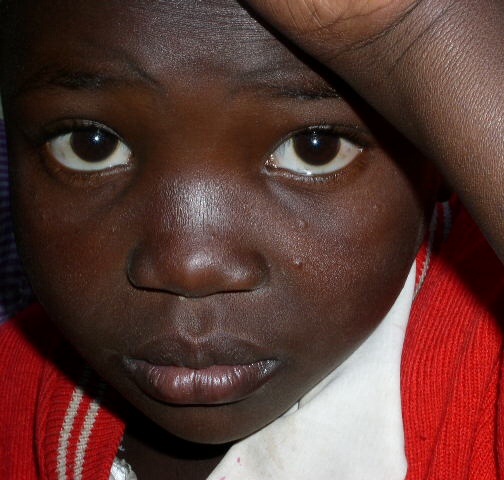
Many of the young girls here will turn to nursing, for Sr. Freda has also created a nursing school on the compound. She grows all the food to feed the children, has a primary program for the little ones, began the high-school for girls, and it is here, where her dream for a hospital began. The hospital is a place where the poorest of villagers can come and receive care. She is truly a miracle worker in the flesh. Her life is devoted to her people and their plight. She has raised up a hospital, fully equipped for surgeries, every day illness or injury and maternity care. People from these remote mountainous villages no longer have to “crawl on their hands and knees” to the Kitale hospital for care. They are admitted here without cost. Everything she has done has been dependent on donations and, as she says, “God’s help.”
“What’s your name,” asked a girl of about fourteen who was standing on a bench outside the school. I told her. “Are you from North America?” I said yes and was impressed she asked if I’m from North America rather than America. “I’m very happy to see you,” she said and ran off to meet her friends. They howled across the school yard, singing at the top of their voices “The American is here!”
I was glad they were in school. Many of the girls here begin taking care of their siblings at the age of seven, some even earlier. If they hadn’t been fortunate to meet Sr. Freda, most of their day would have been spent hauling water. It takes hours of a day to walk to fill jugs of water for a family that may have seventeen people, leaving girls unable to attend school. Their playthings of rags, sticks, old tins and any other bits of refuse they could lay their hands on make them seem young, but when I look in the faces of some of the village girls, I see eyes that are already cloudy with despair.

 Betty In Kenya
Jill
/ May 7, 2014All the beauty and exoticism amidst the desperate conditions. What does
it mean to be rich, poor?
Rose Minar
/ May 14, 2014Sis, I am so enjoying reading your Journal. Somehow it doesn’t surprise me that you continue journeying and searching, helping others along the way. I have always admired you.
Love,
Rose